White Balance
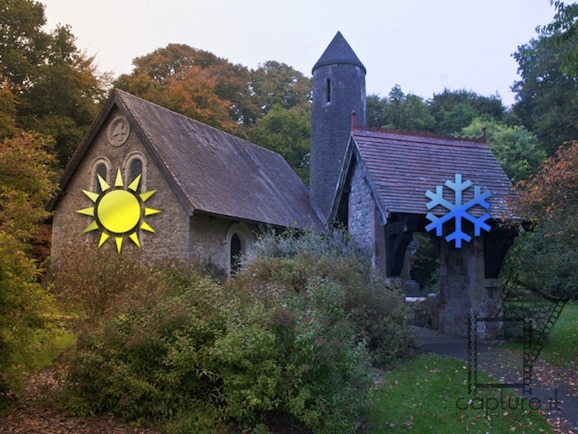
Showing the difference between two White Balance settings on the same scene. On the left a daylight setting has been used and on the right is tungsten.
When we look outside and see everything lit by the white glow of the sun, this white light can be split up into all the different colors of the spectrum (colors of the rainbow). This is the type of light your digital camera is designed to see. Every now and then though you might take a photo lit by artificial light, such as a fluorescent light or a candle. Even though this light appears white, the color combinations that make it up are different to those of the sun, and not all of the spectrum is present. Because of this, your camera needs its White Balance adjusted to take account of occasions where not all of the spectrum is visible.
Most cameras have at least five different white balance settings. Auto, daylight, shade, tungsten and fluorescent. All of these settings alter the way the cameras sensor sees and records the light.
By default your camera will be set to auto. If your camera isn’t though, and you take a photo with the wrong white balance setting, the difference in color will be quite noticeable. For instance, in the daylight, a Tungsten white balance setting will give you a blue tinged photo, as this setting is used to compensate for the warm colors cast from household lighting.
Auto mode, rather than detecting the type of light and then changing the mode accordingly, uses a custom algorithm to guess the color of the light. Whilst it does produce a nice photo the majority of the time, manually changing the White Balance will give you a much better result.
As has been said in many of my guides, the best way to understand White Balance is to play around. Whereas with exposure and aperture there’s a very fine line to getting the correct settings, White Balance is very simple, direct, and easy to get right. You don’t always have to pick the exact setting for the lighting conditions either. Be creative and see what moods you can generate with different White Balances.


11. Mar, 2009 


Author