Aperture
Using Aperture to manipulate the Depth of Field
In many ways, a digital camera is like our eye. The light from whatever we see is focused by the lens, and then passes through the pupil into the eye. After a few more complex steps the Optic Nerve at the back picks up the light, and then we can see. This can almost be directly related to features on a digital camera. The cameras lens is of course our eye’s lens, the Optic nerve is the CCD, and the pupil of our eye is the Aperture.
When you’re in a dark room, your pupils will dilate to let as much light in as possible. Switch the light on and you’ll find that your eyes instantly contract so that you’re not blinded. On a camera, the aperture works in a very similar way. It expands to let in more light when it’s needed, and shrinks to keep it out, to ensure your photo isn’t over exposed.
It does this by a measure known as F-Stops. The Aperture will have different levels to which is expands and contracts to, usually ranging from about F2.8 to F11 (keep in mind this can vary significantly depending on the price, range and lens of your camera). Despite how it may seem though, when your camera is on F2.8, the lens opening is wide, and F11 means that the opening is small. The higher the F-Stop, the smaller the aperture.
If you switch it off auto mode, the aperture can of course controlled manually by using either the Aperture Priority mode or the Manual mode. If you are using a wider aperture and hence are letting more light in, the shutter speed will need to be faster to compensate for this.
Garden Fireworks by Mark-F
When you see an artistically crafted image with a very wide aperture, the blurred content such as lights will scarecely look completely round. Instead, just like this image above, the blurred points are slightly hexagonally. Interestingly this is the shape of aperture diaphragm of your camera.
Aperture isn’t just a means of properly exposing your photos though. It’s the key contributor to one of the simplest yet most effective photographic techniques, the Depth of Field (DOF).
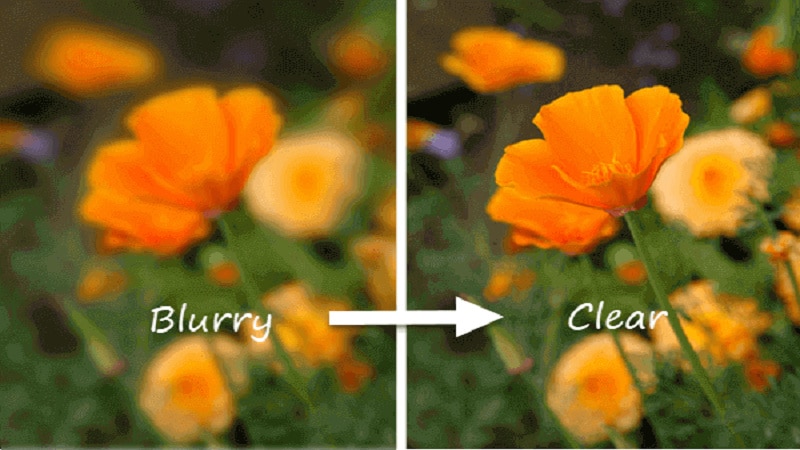
The Depth of Field basically refers to the range of in-focus visibility in the shot. The two images above were taken with a wide aperture, and hence a shallow depth of field (See how the foreground and background are blurred and out of focus?). But why does this happen?
When we see light, we aren’t just seeing one beam, but rather a countless number. If you open the aperture to be wider, then these light rays can enter the camera with relative ease, which causes your subject to be in focus and the background and foreground to be softer and out of focus (a shallow Depth of field). By closing the aperture though, you’re cutting out a significant portion of entry space, meaning that these rays enter in a much finer state. This subsequently causes your photo to have a much deeper DOF, and the back and foreground are more in focus than before.
So play around, because as always, it’s the only way you’ll learn. Keep the aperture and depth of field in mind whenever you’re taking a photo, because it can be one of the most powerful and aesthetically pleasing effects in photography, and it’s a sinch once you get the hang of it.


14. Mar, 2009 


A great tutorial explaining the importance of focus depth. This can completely transform a photo!
[Reply]